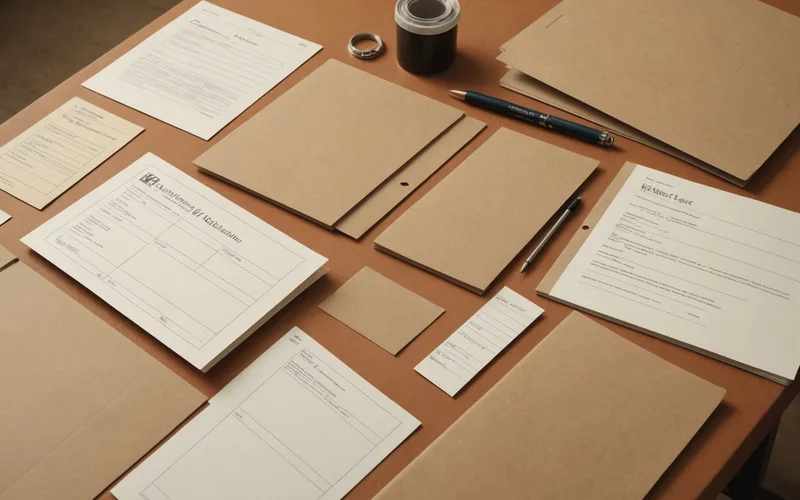
When closeout documentation waits until after the client moves in, the next client asking for that material may discover that no record exists. After final photographs and the walkthrough, many designers move mentally to the next project. The material record that should complete the job gets less attention than the work before it. The cost rarely appears at handover. It surfaces six months later when a client needs a replacement tile and no one can identify the manufacturer, or eighteen months later when you want the same limestone from the same supplier but cannot determine the lot or finish used. Completing documentation before closeout prevents both problems.
Complete closeout records support client service and preserve studio knowledge. Those goals may seem separate, but both depend on the same information gathered at the same point in the project.
What Belongs in a Material As-Built
A material as-built documents what was installed, rather than what was originally specified. The two can differ. Construction substitutions may result from availability, changing client preferences, or field conditions. The as-built records the finished result, not the design intent. For every project material, record the manufacturer, exact product name and code, finish and format, lot or batch when available, supplier, trade account or order reference, approximate installed quantity, recommended maintenance, and any sealing or treatment applied.
The list is substantial, and accurate completion takes time. The practical approach is to build the record throughout the project instead of starting at closeout. File each order confirmation with enough detail to reconstruct the as-built. Record substitutions when they occur. Maintained this way, the final as-built is assembled from existing information rather than rebuilt through late research.
Maintenance Handover Gap
Without clear maintenance instructions, clients may ignore the materials and cause premature deterioration, or use the wrong products and damage them. Neither result reflects well on the design. Stone intended for annual sealing can look noticeably different after three or four years if it was never sealed. Timber floors treated with an unsuitable product can fail in avoidable, costly ways.
A maintenance handover can be simple. One page for each material category should identify the material, cleaning method, periodic care, products to avoid, and a professional maintenance contact. Specific instructions are most useful: "use a pH-neutral stone cleaner, avoid citrus or bleach, and wipe dry after wet cleaning" is better than "use a stone cleaner." Clear directions are more likely to be followed than a default household product from under the sink.
Samples in the Studio Archive
Most studios maintain a sample library, yet its link to project closeout is often loose. Project samples may return to a general area or disappear during the transition. Without a dependable record, it becomes difficult to identify which project used a material or retrace the sourcing behind one that performed especially well.
Retain one sample per material category for each completed project, filed by project in a dedicated archive area. That sample anchors the project record. Two years later, when a similar brief appears, you can retrieve the sample, product details, supplier, and approximate pricing context from the original work. After three or four years of consistent archiving, a studio gains a sourcing advantage by reusing prior decisions instead of researching every option again.
Photography as Documentation
Completed-project photographs have several uses, but their role as material records is often missed. A close view of a stone floor in natural afternoon light shows how it reads in an actual installation, something a sample or product image cannot provide. A junction detail records the execution quality of a carefully resolved transition. Store these images in the project archive with the specification documents, not only with general portfolio photography.
The most useful record images are usually details, not wide hero views: grout width against tile format, wall plaster texture in raking light, or timber finish responding to light from the adjacent window. Such photographs guide future decisions about a material's visual performance in a particular application. They are difficult to recreate once the project is no longer fresh or accessible.
The Cost of Skipping Documentation
The case against closeout documentation is familiar: one project is finished, the next is waiting, and recordkeeping feels like administrative work without immediate value. That logic may hold briefly, but it becomes expensive over two-to-three years. The situations where missing records create real cost are common and predictable.
A client extending a room or repairing floor damage needs the manufacturer, product code, and production batch to match additional tiles correctly. Without an as-built, the designer must perform an unplanned sourcing exercise. A new project with a similar brief can also benefit from earlier material decisions, but without an archive that knowledge must be recovered from scratch. When a warranty or dispute requires reconstructing the specification, a complete project file resolves the matter far faster.
This is not about claiming material documentation matters more than design work; it is about recognizing the cost of missing records. The time needed to maintain accurate information is far less than the time needed to recover information that was never captured. Over a practice's lifespan, a well-kept studio archive also builds measurable value.
Scheduling Closeout in the Project Timeline
Make material closeout a defined phase with a deliverable and deadline, rather than an administrative task left for later. Reserve one or two days after final photography for the closeout. That schedule creates a clear expectation, keeps the project fresh, and makes client handover part of the service. Clients value a complete folder containing material as-builts and maintenance guides. It is a tangible sign of professional care, and a well-maintained project record makes it achievable without excessive effort.